
Download this resouce by completing the form below
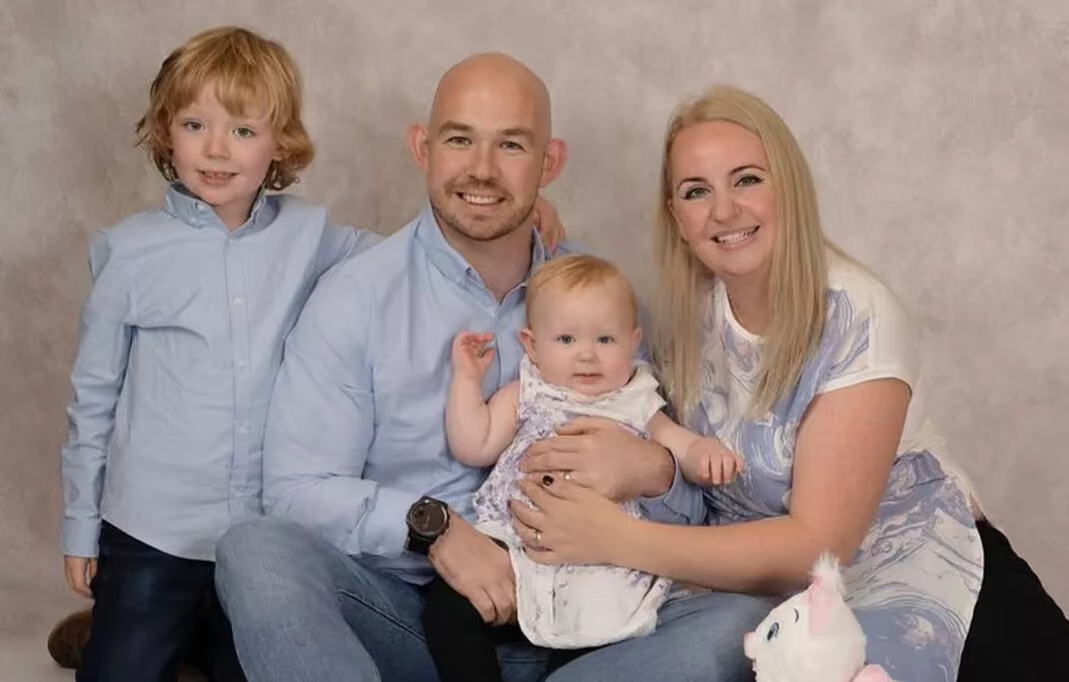
Baby loss affects men emotionally even when their grief is less visible than the physical experience of the person who was pregnant. Men may mourn the baby, the imagined future and their inability to protect their partner, while feeling expected to stay strong. After three losses, including the loss of his son’s twin, Ciaran reflects on grief that coexists with love, gratitude and family life.
Content note: This personal article discusses miscarriage and the loss of a twin. For a wider practical guide and UK support routes, read Men’s Grief After Baby Loss.
Why am I talking about baby loss?
Baby loss is something many families experience, yet it can remain hidden. It comes with pain, unanswered questions and too few spaces where people feel able to speak honestly.
For my wife and me, it was not one loss but three. Each pregnancy brought hope, excitement and a picture of what life might become. Each loss meant grieving not only a pregnancy, but also the child and future we had begun to imagine.
I am sharing this because the silence surrounding men’s grief can make an already painful experience harder to carry.
Can joy and grief exist in the same family story?
Yes. Our son is deeply loved, and loss is also part of his story. He was originally a twin, but his sibling died early in the pregnancy.
The birth of a living child did not cancel the twin who was lost. Gratitude and grief did not replace one another; they existed together. That mixture has stayed with me and shown me that miscarriage can continue to shape a family long after the immediate medical event.
Parents may feel pressure to focus only on the surviving baby or later children. Remembering the baby who died is not a failure to appreciate the child who lived. Families should be allowed to decide whether and how that loss forms part of their story.
Why can men feel invisible after baby loss?
The person who was pregnant experiences the physical loss and may need medical care. Their trauma deserves proper attention. The problem arises when everyone assumes that the partner is only a supporter and has no grief of his own.
Men may hear or internalise messages such as:
- “You need to be strong for her.”
- “At least you were not very far along.”
- “You can try again.”
- “How is your partner?” without anybody asking how they are
Concern for the mother and concern for the partner do not have to compete. The experiences are different, but both people can need support.
What did staying strong mean for me?
I thought strength meant being steady, practical and quiet. That can be useful in an urgent moment, but I carried the silence long after the immediate need had passed.
Hidden grief can appear as anger, numbness, withdrawal, overwork, poor sleep or a need to keep moving. A man may not describe himself as sad and may still be deeply affected.
There is no single right response. Some people talk immediately; others need private time. The important difference is between choosing privacy and feeling that you are not permitted to grieve.
Does repeated loss make grief easier to understand?
Not necessarily. A later loss can reopen earlier losses, and each pregnancy may carry both hope and fear. People may become hyper-alert to symptoms, struggle to believe good news or avoid imagining a future pregnancy.
Repeated loss can also affect partners differently. One may want medical explanations and another may need emotional space. One may want to try again quickly while the other cannot consider it.
There is no requirement to make the same decision at the same speed. A follow-up clinical discussion and specialist counselling can help separate medical questions, emotional readiness and pressure from other people.
What helped me understand the grief?
The first step was recognising that what I carried had a name. It was not weakness or selfishness. It was grief.
Talking can take different forms:
- Telling a partner, “I have been hiding how much this affected me”
- Speaking to a GP or counsellor
- Sharing with one trusted friend
- Joining a group for partners or fathers
- Writing privately when speaking feels too difficult
- Marking a baby or anniversary in a personal way
You do not have to share publicly, and you do not have to disclose every detail to receive support.
How can families talk about a baby who died?
Every family chooses differently. Some use the baby’s name, keep scan images or mark an anniversary. Others prefer a private memory. In a family where a twin survived, parents may eventually consider how and when to explain that part of the child’s story.
There is no universal script. Think about:
- What is factually known
- Which details belong to the child or partner as well as to you
- How to use age-appropriate language
- Whether professional bereavement guidance would help
- How to allow different family members to feel differently
The aim is not to force constant remembrance or secrecy. It is to make room for a true part of the family’s history without placing emotional responsibility on a child.
What can friends and relatives do for a grieving man?
- Ask how he is, not only how his partner is
- Listen without trying to repair or rank the loss
- Remember that another child does not erase this baby
- Offer one practical action
- Check in again after the first few weeks
- Respect whether he wants to talk or simply have company
- Encourage qualified help if he is not functioning or feels unsafe
An imperfect but sincere question is usually better than silence.
When should you ask for professional help?
Speak to a GP, bereavement service or qualified mental-health professional if grief is worsening or affecting sleep, work, relationships, alcohol or drug use, or daily functioning.
If you or someone else is in immediate danger, call 999 or go to A&E. For urgent mental-health help in England that is not an emergency, use NHS 111 online or call 111 and select the mental-health option. Samaritans can be contacted free on 116 123 at any time.
Sands, Tommy’s and Miscarriage UK also provide specialist pregnancy and baby-loss support.
Why was this first published during Baby Loss Awareness Week?
I originally shared these reflections for Baby Loss Awareness Week in October 2025. Awareness weeks can create a moment for public conversation, but grief does not follow a campaign calendar. This page should remain useful throughout the year.
Remove the date range from the meta description and avoid making the article look expired. Link to the current Baby Loss Awareness Week website only if the annual campaign details are checked and updated each year.
Editorial safeguards before publication
- Obtain Ciaran and his wife’s approval for the substantive edit
- Confirm permission to mention three losses, their son and the loss of his twin
- Check how the family wants the twin and later children described
- Avoid adding gestation, medical details or a baby’s name without explicit consent
- Do not compare the depth of the two parents’ grief
- Link to the general support guide so this page remains a personal reflection rather than duplicate advice
- Replace the old duplicate H1 and correct the download typo in the Webflow template
The most important thing to remember
A man’s grief after baby loss is real even when nobody can see it. A living child, a later pregnancy or the passage of time does not erase the baby who died. You are allowed to support the people you love and to ask somebody to support you.
Join The Male Fertility Hub community for moderated peer connection.
Sources and support
- Sands: Support for anyone affected by pregnancy loss or the death of a baby
https://www.sands.org.uk/support-you - Tommy’s: Baby loss support
https://www.tommys.org/baby-loss-support - Miscarriage UK
https://www.miscarriageuk.org/ - NHS: Miscarriage
https://www.nhs.uk/conditions/miscarriage/ - Samaritans
https://www.samaritans.org/how-we-can-help/contact-samaritan/talk-us-phone/
This article is a personal account and general information. It does not replace medical or mental-health care.