
Download this resouce by completing the form below
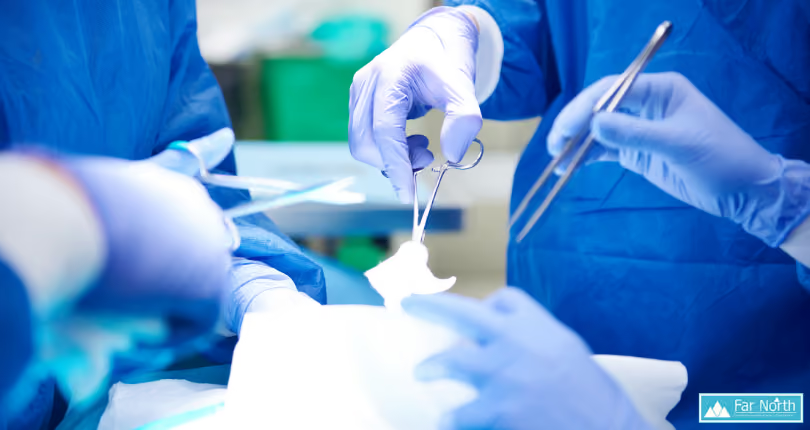
Surgical sperm retrieval collects sperm directly from the epididymis or testicle when none or too few are available in the ejaculate. The correct technique depends mainly on whether sperm production is blocked or severely impaired. Retrieved sperm are usually frozen or used fresh with IVF and ICSI. Retrieval does not guarantee fertilisation, pregnancy or a baby.
Why might surgical sperm retrieval be needed?
Surgical sperm retrieval, sometimes shortened to SSR, may be considered when sperm cannot be obtained in an ordinary semen sample or are unavailable for fertility treatment.
Reasons can include:
- A blockage after vasectomy, infection, injury or surgery
- Congenital absence of the vas deferens, which can be associated with CFTR gene variants
- Non-obstructive azoospermia, where sperm production is severely reduced
- Ejaculatory failure or retrograde ejaculation when less invasive approaches have not provided usable sperm
- Difficulty producing a treatment sample, in selected circumstances
The procedure should follow a diagnosis. “No sperm seen” on one semen analysis is not enough information to choose an operation.
What is the difference between obstructive and non-obstructive azoospermia?
The distinction strongly influences which retrieval method is appropriate.
Obstructive azoospermia
The testicles may produce sperm, but a blockage or absent duct prevents sperm reaching the ejaculate. Testicular size and reproductive hormones may be relatively normal, although assessment is still required.
The 2026 NICE guideline says people with obstructive azoospermia should be offered surgical correction or sperm retrieval. The choice should consider the other partner’s fertility, the time since the obstruction, risks, benefits and personal preference.
Non-obstructive azoospermia
Sperm production in the testicles is severely impaired or absent. Small isolated areas may still produce sperm even when none are found in semen.
NICE says surgical sperm retrieval should be offered for non-obstructive azoospermia and that micro-TESE should be considered. The probability of finding sperm varies considerably and cannot be guaranteed.
Which surgical sperm retrieval procedures are available?
PESA
- Where sperm are sought: Epididymis
- How it is performed: A fine needle draws fluid through the scrotal skin
- Common context: Obstructive azoospermia
MESA
- Where sperm are sought: Epididymis
- How it is performed: Microsurgery opens and samples epididymal tubules
- Common context: Obstructive azoospermia when microsurgical collection is appropriate
TESA
- Where sperm are sought: Testicle
- How it is performed: A needle aspirates tissue through the scrotal skin
- Common context: Selected obstructive cases; use varies by service
TESE
- Where sperm are sought: Testicle
- How it is performed: A small incision allows one or more tissue samples to be removed
- Common context: Obstructive cases when epididymal retrieval is unsuitable; some testicular sperm-retrieval pathways
Micro-TESE
- Where sperm are sought: Testicle
- How it is performed: An operating microscope guides targeted removal of promising tubules
- Common context: Non-obstructive azoospermia
The abbreviations can sound similar, but aspiration and extraction are not the same. TESA uses a needle; TESE takes tissue through an incision. Ask the clinic to write down the full procedure name and why it fits your diagnosis.
What is PESA?
Percutaneous epididymal sperm aspiration uses a fine needle to draw sperm-containing fluid from the epididymis, the coiled structure where sperm mature and are stored.
PESA is commonly used for obstructive azoospermia, such as after vasectomy or when the vas deferens is absent. It is often performed under local anaesthetic, sometimes with sedation or general anaesthetic depending on the service and treatment plan.
If adequate sperm are not found, the surgeon may move to TESA or TESE during the same appointment if this has been discussed and consented to beforehand.
What is MESA?
Microsurgical epididymal sperm aspiration uses an operating microscope and a small incision to identify and open epididymal tubules. The laboratory examines fluid samples for sperm.
MESA may allow a larger quantity of epididymal sperm to be collected in some obstructive cases, but it is a more involved microsurgical procedure than PESA and usually requires general anaesthetic. Availability depends on local expertise.
What is TESA?
Testicular sperm aspiration passes a needle into the testicle and uses suction to obtain small pieces of tissue or fluid. It does not normally involve the open incision used for TESE.
TESA can be used in selected patients, particularly when sperm production is likely to be preserved but epididymal collection is not possible or appropriate. It is generally less suitable than micro-TESE for searching for isolated sperm production in non-obstructive azoospermia.
What is TESE?
Testicular sperm extraction makes a small incision and removes one or more testicular tissue samples. The laboratory processes the tissue to look for sperm.
TESE may be used when a blockage prevents epididymal retrieval or when the clinical team has agreed a testicular extraction approach. The anaesthetic, number of samples and whether one or both testicles may be explored should be discussed beforehand.
What is micro-TESE?
Micro-TESE opens the testicle and uses an operating microscope to identify seminiferous tubules that appear more likely to contain sperm. The surgeon takes small targeted samples that are examined by the laboratory.
It is mainly used for non-obstructive azoospermia, where sperm production may exist only in isolated areas. The procedure is more extensive than PESA or TESA and is usually performed under general anaesthetic by a specialist team.
Read Micro-TESE Surgery for detailed preparation, recovery and contingency planning.
What tests are needed before sperm retrieval?
Assessment may include:
- Repeat semen analysis confirming azoospermia when appropriate
- Physical examination of the testicles, epididymides and vas deferens
- Testosterone, FSH and LH blood tests
- Karyotype and Y-chromosome microdeletion testing for unexplained azoospermia
- CFTR testing when obstructive azoospermia or an absent vas deferens is suspected
- Scrotal ultrasound or other imaging when clinically indicated
- Infection screening required for fertility treatment and sperm storage
- Assessment of the partner providing eggs and the couple’s treatment timescale
NICE says not to offer surgical sperm retrieval when an AZFa or AZFb Y-chromosome microdeletion is present. Genetic counselling should be provided when a relevant abnormality is identified.
If obstruction is suspected, ask whether reconstruction and natural conception are realistic alternatives to retrieval and ICSI.
What happens during the procedure?
The details depend on the technique, but the usual pathway involves:
- Confirming identity, consent and the agreed plan
- Local anaesthetic, sedation or general anaesthetic
- Collecting epididymal fluid or testicular tissue
- Passing each sample to an embryology or andrology laboratory
- Examining the sample for sperm
- Taking further samples within agreed limits if needed
- Closing any incision and monitoring recovery
Many procedures are day cases. Ask whether the laboratory will be present or available during the procedure and whether you will learn the result the same day.
What happens to sperm after retrieval?
If sperm are found, they may be frozen or used immediately. Surgically retrieved sperm are normally used within an IVF cycle with ICSI, where an embryologist injects one sperm into each suitable mature egg.
The laboratory considers the number, movement and condition of the sperm and whether freezing is appropriate. Very small or poor-quality samples may not survive freezing and thawing well, so the team may discuss coordinating fresh retrieval with egg collection.
Ask:
- How many treatment attempts the stored sample might support
- Whether all sperm will be frozen in one container or divided
- Whether a test thaw is used
- What storage consent and annual charges apply
- What happens if only immotile sperm are found
Read IVF vs ICSI for the fertilisation and embryo process.
What are the sperm retrieval success rates?
There is no useful universal range covering every procedure and diagnosis. Retrieval is usually much more likely when sperm production is preserved behind a blockage than when production is severely impaired.
Published or clinic figures can be misleading unless you know:
- The underlying diagnosis and genetic findings
- Whether this is the first or a repeat retrieval
- Which procedure was used
- Whether “success” means any sperm, usable sperm or enough sperm to freeze
- The experience of the surgeon and laboratory
- Whether the data include only carefully selected patients
The old article’s broad 22% to 77% range should not be republished because it combines different patients and procedures without enough context.
Even successful retrieval does not provide the live-birth rate. A baby depends on ICSI fertilisation, egg factors, embryo development, transfer and pregnancy.
What are the risks?
Risks differ by procedure and anaesthetic. They can include:
- Pain, swelling and bruising
- Bleeding or scrotal haematoma
- Infection
- Anaesthetic complications
- Injury or scarring affecting the epididymis or testicle
- Testicular shrinkage or loss of tissue
- A fall in testosterone after testicular extraction
- Failure to retrieve sperm
- The need for a more extensive procedure
Ask who will monitor testosterone after TESE or micro-TESE and what symptoms should trigger a blood test.
What is recovery like?
Needle procedures often have a shorter recovery than open extraction, but individual advice takes priority. You may be told to rest, wear scrotal support, use pain relief and temporarily avoid strenuous exercise, heavy lifting, cycling, sex or ejaculation.
Contact the surgical team for fever, increasing redness, wound discharge, severe or worsening pain, rapidly increasing swelling, difficulty passing urine or another symptom listed in your discharge information.
Do not plan work, travel or exercise solely from a generic online timeline. Ask the surgeon what is realistic for the exact procedure and your type of work.
What if no sperm are found?
An unsuccessful retrieval can be a major loss, not merely a laboratory result. The clinic should explain:
- Whether further laboratory assessment is pending
- Whether a different or repeat retrieval would ever be appropriate
- The implications for testicular and hormonal health
- What happens to any eggs collected at the same time
- Which reproductive and non-treatment options remain
Options can include donor sperm, donor embryos, adoption, fostering or living without children. Counselling should be available before a decision is required, particularly if donor sperm is being considered.
Can surgical sperm retrieval be funded by the NHS?
Availability and funding can vary by region and by whether retrieval is considered part of an NHS-funded fertility pathway. Ask your GP, specialist and local commissioning body for the current written criteria.
If paying privately, request an itemised plan covering:
- Surgical, anaesthetic and facility fees
- Laboratory examination
- Infection screening
- Sperm freezing and storage
- IVF and ICSI
- Medication and egg collection
- What is charged if no sperm are found
- Future thawing or transport of stored samples
Questions to ask before surgical sperm retrieval
- Has the cause of azoospermia been established?
- Is it obstructive or non-obstructive?
- Have all relevant hormone and genetic tests been completed?
- Why are you recommending this procedure rather than PESA, TESA, TESE, micro-TESE or reconstruction?
- What is your audited retrieval rate for my diagnosis?
- What is the planned next step if the first technique finds no sperm?
- Will sperm be frozen or used fresh?
- What happens to the eggs if no sperm are retrieved?
- What are the risks to my testicle and testosterone?
- What will the complete treatment cost?
- What emotional support is available if retrieval is unsuccessful?
The most important thing to remember
The best sperm-retrieval procedure is determined by the cause, not by which technique sounds most advanced. Confirm whether the problem is obstruction or sperm production, complete the appropriate genetic and hormonal assessment, and agree how sperm, eggs and unexpected outcomes will be handled before surgery.
For help through the decision or recovery, join The Male Fertility Hub community.
Related articles
- IVF Explained: Everything Men Need to Know
- IVF Add Ons Explained with Professor Tim Child, Evidence You Can Trust
- NHS Fertility Funding for Men Explained with Anne Howard
Sources
- HFEA: Surgical sperm extraction
https://www.hfea.gov.uk/treatments/explore-all-treatments/surgical-sperm-extraction - NICE guideline NG257: Management of male-factor fertility problems
https://www.nice.org.uk/guidance/ng257/chapter/Management-of-male-factor-fertility-problems - NICE guideline NG257: Investigation of fertility problems
https://www.nice.org.uk/guidance/ng257/chapter/Investigation-of-fertility-problems-and-management-strategies - Cambridge University Hospitals: PESA patient information
https://www.cuh.nhs.uk/patient-information/sperm-retrieval-from-vas-deferens-or-epididymis-pesa-information-for-patients/ - Cambridge University Hospitals: TESE patient information
https://www.cuh.nhs.uk/patient-information/sperm-retrieval-from-testicle-tese-information-for-patients/ - Manchester University NHS Foundation Trust: Surgical sperm retrieval
https://mft.nhs.uk/saint-marys/services/gynaecology/reproductive-medicine/surgical-sperm-retrieval-ssr/
This article provides general information and does not replace individual advice from a specialist urologist, andrologist, embryologist or fertility clinician.