
Download this resouce by completing the form below
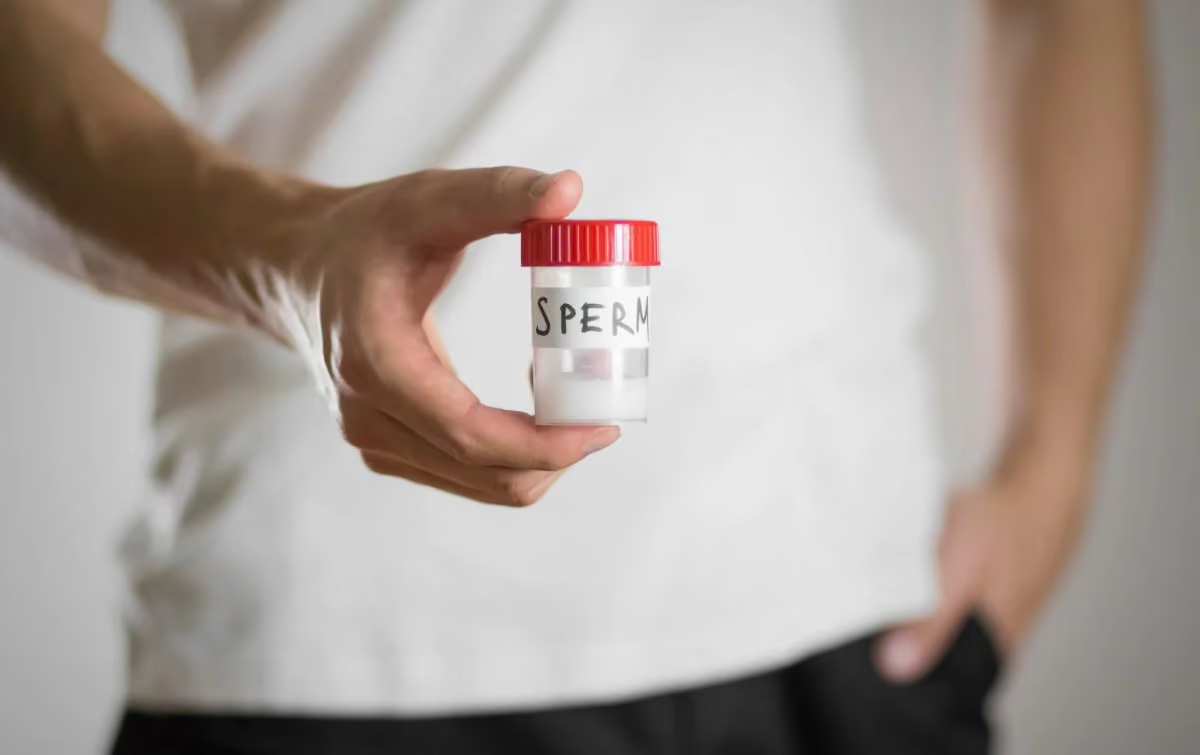
You cannot reliably tell whether your sperm are healthy from the colour, thickness or amount of semen. The main test is a laboratory semen analysis, which measures sperm concentration, total number, movement, shape and other characteristics. Results must be considered together, and an abnormal result normally needs to be confirmed before conclusions are drawn.
Can you tell whether sperm are healthy by looking at semen?
No. Sperm cells are microscopic, and semen is the fluid that carries them. The appearance or volume of an ejaculate cannot tell you how many sperm it contains, how well they move or what proportion have a typical shape.
Semen varies naturally in colour, consistency and volume. This means that apparently “normal” semen can contain very few or no sperm, while a visible change does not necessarily indicate a fertility problem.
Blood in semen, persistent discolouration, an offensive smell, pain during ejaculation or urination, a testicular lump or swelling should be discussed with a GP. These symptoms deserve assessment, but they are not a substitute for a fertility test.
What is the best test for sperm health?
A diagnostic semen analysis performed by an appropriate andrology laboratory is the usual first-line male fertility test. It examines a fresh semen sample using standardised laboratory procedures.
The main measurements include:
Semen volume
- What the laboratory assesses: The amount of fluid in the complete sample
Sperm concentration
- What the laboratory assesses: The number of sperm in each millilitre
Total sperm number
- What the laboratory assesses: The number of sperm in the whole sample
Motility
- What the laboratory assesses: How many sperm move, including how many move forwards
Morphology
- What the laboratory assesses: The proportion of sperm with a typical shape under strict criteria
Vitality
- What the laboratory assesses: The proportion of sperm that are alive, when this is required
Other observations
- What the laboratory assesses: These may include pH, liquefaction, viscosity and white blood cells
These figures must be read together. A result above every lower reference value does not guarantee pregnancy, and a result below one or more values does not prove that natural conception is impossible.
For the current UK reference values and a detailed guide to each measurement, read Semen Analysis Results Explained.
What counts as a normal semen-analysis result?
The 2026 NICE fertility guideline refers to World Health Organization lower reference values. These include a sperm concentration of 16 million per millilitre, a total sperm number of 39 million per ejaculate, total motility of 42%, progressive motility of 30%, vitality of 54% and morphology of 4%.
These are lower reference limits from a population of men whose partners conceived within 12 months. They are not pass-or-fail fertility thresholds. The WHO manual also makes clear that semen analysis contributes to clinical assessment rather than classifying an individual as fertile or infertile.
Ask for the complete report and for someone suitably qualified to explain the result in the context of your history and your partner’s assessment.
When should you have your sperm health checked?
The NHS advises speaking to your GP if you and your partner have not conceived after one year of regular sex without contraception. Seek advice after six months if your partner is aged 36 or over.
You should consider speaking to a GP sooner if you have a known reason for concern, including:
- Previous chemotherapy, radiotherapy or pelvic surgery
- Undescended testicles, testicular injury or infection
- A testicular lump, swelling or persistent pain
- Problems with erections or ejaculation
- Previous abnormal semen-analysis results
- Use of testosterone treatment or anabolic steroids
- A genetic, hormonal or long-term health condition that may affect fertility
Fertility assessment should usually involve both partners. Investigating one person at a time can cause avoidable delay.
Read Male Fertility Testing Through Your GP for the UK testing pathway.
How do you prepare for a sperm health test?
Use the instructions from the clinic or laboratory performing your test. UK laboratories commonly request around two to five days without ejaculation, but the exact period and delivery arrangements vary.
You will normally need to:
- Produce the sample into the sterile container provided
- Avoid ordinary condoms and lubricants unless the laboratory has approved them
- Collect the full sample and report if any was missed
- Record when it was produced and when you last ejaculated
- Follow the stated time and temperature requirements if producing it at home
Recent fever or illness, incomplete collection and the length of abstinence can influence the result. Tell the laboratory or clinician about these factors rather than trying to interpret the figures without them.
See How Abstinence Timing Affects Male Fertility Testing before your appointment.
Are home sperm tests accurate?
It depends on the test. Some home services send a sample to a diagnostic laboratory and provide a broader analysis. Many instant home kits assess only one or two measurements, such as sperm concentration or motility.
A result from a limited kit cannot rule out a problem with a parameter it does not measure. It may also be difficult to know whether collection, transport, laboratory quality control and interpretation meet diagnostic standards.
If you have been trying to conceive without success, have symptoms or relevant medical history, or receive an unusual home result, arrange a proper clinical assessment. Do not allow a reassuring home result to delay seeking help.
Read The Growth of Home Sperm Testing for questions to ask before buying a test.
What happens if the result is abnormal?
An abnormal first result is not normally treated as a final diagnosis. The 2026 NICE guideline recommends a repeat confirmatory semen analysis, ideally after about three months. This allows for the sperm-production cycle. A repeat should be arranged sooner when azoospermia, meaning no sperm seen, or severe oligozoospermia is found.
After two or more abnormal results, NICE recommends a physical examination of the scrotum and testicles and says testosterone and gonadotrophin blood tests should be considered. Further tests depend on the pattern of results, medical history and examination.
Possible next steps include:
- Reviewing whether collection or short-term illness affected the sample
- Discussing medication, testosterone or anabolic-steroid use
- Referral to an andrologist, urologist or fertility specialist
- Hormone, genetic or imaging investigations when indicated
- Discussing natural conception or fertility treatment based on both partners’ circumstances
Ask whether a potentially treatable or important underlying cause has been considered before moving straight to a treatment decision.
What can affect sperm health?
Semen quality may be influenced by medical conditions, genetics, hormones, medication, infection, testicular problems, age, lifestyle and environmental exposures. In many cases, no single cause is identified.
Actions that support general and reproductive health include:
- Do not smoke
- Avoid anabolic steroids and recreational drugs
- Keep alcohol within the UK guideline of no more than 14 units a week, spread across several days
- Work towards a healthy weight through a balanced diet and regular activity
- Discuss possible workplace exposure to pesticides, solvents or heavy metals
- Review medication and testosterone treatment with a clinician if you are trying to conceive
Do not stop prescribed medication without medical advice. In particular, prescribed or non-prescribed testosterone can suppress sperm production, but changes need to be planned safely with the clinician responsible for your care.
Do supplements improve sperm health?
No supplement can guarantee improved semen quality or pregnancy. Products marketed for male fertility often contain antioxidants, vitamins or minerals, but formulas, doses and evidence vary. Supplements can also interact with medicines or provide excessive doses.
Before spending money, ask:
- Is there evidence for this product in men with my particular diagnosis?
- Is the dose safe alongside my medicines and other supplements?
- What outcome is it supposed to improve: a laboratory figure, pregnancy or live birth?
- Would taking it delay proper investigation of an abnormal result?
A balanced diet is a more reliable foundation than using supplements to compensate for poor nutrition. If a deficiency has been diagnosed, follow individual advice from an appropriate health professional.
How long does it take for sperm health to change?
Sperm production takes place over several weeks, which is why repeat semen analysis is normally separated by about three months. This does not mean every lifestyle change will produce a measurable improvement after exactly 90 days. The cause of an abnormal result, the severity and normal sample-to-sample variation all matter.
Use the waiting period to follow agreed health advice and arrange any recommended assessment. Avoid repeatedly testing at short intervals unless a clinician has advised it.
Questions to ask about your sperm health
- Do I need a full diagnostic semen analysis rather than a screening kit?
- Can I have a copy of the complete result?
- Were the sample collection and delivery conditions suitable?
- Which measurements were outside the laboratory reference range?
- When should an abnormal result be repeated?
- Is there anything in my medical history, medication or hormone use that needs investigation?
- At what point should I see a male-fertility specialist or urologist?
The most important thing to remember
You cannot assess sperm health by looking at semen or by relying on symptoms. A good-quality laboratory semen analysis, interpreted alongside your medical history and your partner’s assessment, is the appropriate starting point. If the result is abnormal, confirmation and investigation matter more than searching for a quick fix.
If testing or treatment is affecting your wellbeing, you can also join The Male Fertility Hub community for peer support.
Related articles
- How Stress Affects Sperm Count and Male Fertility: New Research Explained
- Varicoceles and Male Fertility Explained
- Understanding Testosterone: The Hormone That Affects Everything from Fertility to Mental Health
Sources
- NICE guideline NG257: Investigation of fertility problems and management strategies
https://www.nice.org.uk/guidance/ng257/chapter/Investigation-of-fertility-problems-and-management-strategies - NICE guideline NG257: Advice about factors that can affect fertility
https://www.nice.org.uk/guidance/NG257/chapter/advice-about-factors-that-can-affect-fertility - World Health Organization: WHO laboratory manual for the examination and processing of human semen, sixth edition
https://www.who.int/publications/i/item/9789240030787 - NHS: Low sperm count
https://www.nhs.uk/conditions/low-sperm-count/ - NHS: Causes of infertility
https://www.nhs.uk/conditions/infertility/causes/ - Manchester University NHS Foundation Trust: Semen-analysis reference ranges
https://mft.nhs.uk/saint-marys/services/gynaecology/reproductive-medicine/andrology/reference-ranges/
This article provides general information and does not replace individual medical advice. Speak to your GP, andrologist or fertility specialist about your circumstances.