Download this resouce by completing the form below
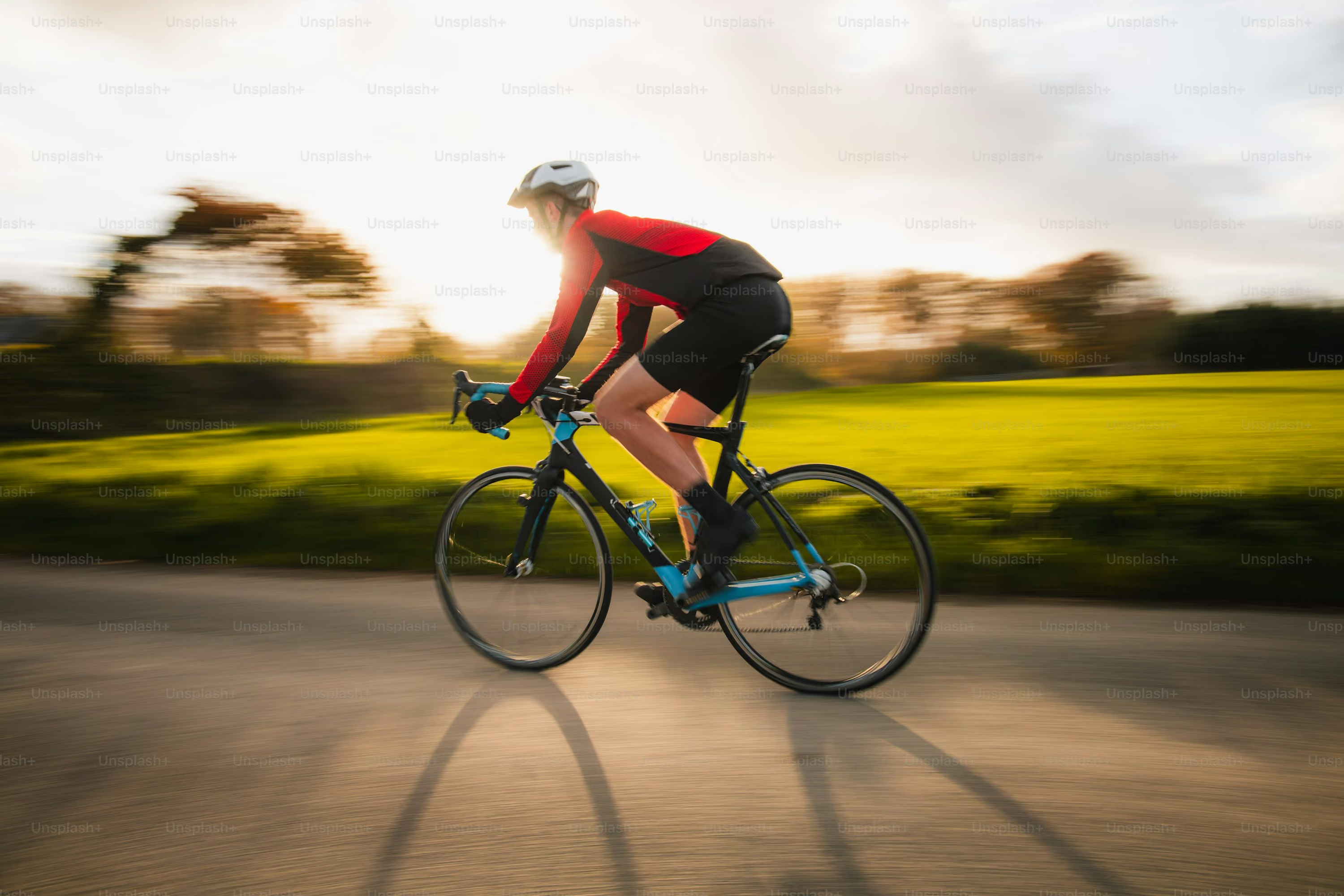
Recreational cycling is not proven to cause male infertility, and there is no evidence-based weekly time limit that applies to every man. Some small studies suggest that high-volume endurance cycling may affect semen quality in some athletes, but the research is limited and inconsistent. You usually do not need to stop cycling solely because you are trying to conceive.
What does the research say about cycling and sperm?
The evidence does not support a simple claim that cycling is either completely harmless or automatically damaging to fertility.
A 2024 systematic review examined 13 studies involving 280 male endurance athletes, including cyclists, runners and triathletes. Some studies found changes in sperm morphology or DNA fragmentation, while others found no meaningful alterations. The reviewers concluded that endurance exercise can affect semen quality, but clinically important effects were uncommon and the overall evidence was limited and generally poor quality.
An earlier systematic review covering different forms and intensities of physical activity found that recreational exercise may benefit some semen parameters. Elite-level exercise may have negative effects in some men, and the cycling studies suggested a possible association with lower sperm concentration.
These findings are associations, not proof that cycling caused the changes. Cycling habits often sit alongside other factors such as training intensity, recovery, energy intake, body composition, heat exposure, illness and the use of performance-enhancing substances.
Is there a safe number of cycling hours each week?
There is no validated five-hour limit, or any other universal threshold, that separates safe cycling from harmful cycling.
One observational study of men attending a fertility centre found that those reporting at least 1.5 hours of cycling each week had a lower average sperm concentration than men reporting no cycling. However, cycling was not associated with clinical pregnancy or live birth after fertility treatment. The study relied on self-reported activity, involved a fertility-clinic population and could not establish cause and effect.
Other studies use different cycling volumes, athlete groups and semen outcomes. This makes it impossible to turn the current evidence into a reliable weekly cutoff.
Your complete circumstances matter more than one number. Consider:
- Whether you cycle recreationally or train at endurance or elite level
- The intensity and duration of individual rides
- Your recovery, sleep and nutrition
- Whether you have symptoms such as numbness, pain or erectile problems
- Your existing semen-analysis results
- Other fertility factors, including medication, testosterone or anabolic-steroid use
Can cycling increase testicular temperature?
Sperm production works best below core body temperature. Cycling can raise scrotal temperature during a ride because of body position, clothing, exertion and reduced airflow.
This is biologically plausible as one way that prolonged or intensive cycling might affect sperm. However, a temporary rise in temperature during a ride does not prove that a man’s fertility has been harmed.
Repeated or sustained genital heat exposure may be more relevant than one ordinary cycling session. If you are concerned about sperm quality, practical measures can include:
- Avoiding unnecessarily tight or poorly ventilated clothing
- Taking breaks during long rides
- Allowing adequate recovery between demanding sessions
- Avoiding additional prolonged heat exposure immediately after riding
- Discussing persistent concerns alongside your semen-analysis results
There is no good evidence that special cooling products are required for ordinary recreational cycling.
Does saddle pressure affect fertility?
Saddle pressure is mainly discussed in relation to perineal numbness, penile blood flow and sexual function rather than sperm production itself.
A systematic review found that saddle design and cycling position can alter pressure on the perineum. Some evidence supported pressure-reducing saddle designs and regularly standing on the pedals, although the best setup depends on the rider and bicycle.
Take numbness seriously. Numbness is not a normal sign that you should simply tolerate during or after a ride.
You can reduce pressure by:
- Having the bicycle professionally fitted
- Checking saddle width, height, angle and position
- Changing position during longer rides
- Standing on the pedals periodically
- Using appropriate cycling shorts
- Reducing or stopping the ride if you develop numbness, pain or erectile symptoms
Speak to a GP or appropriate specialist if symptoms continue after changing your setup.
Is exercise good for male fertility?
Regular physical activity supports cardiovascular health, weight management, sleep and mental wellbeing. These can all matter during a fertility journey.
Randomised-trial evidence suggests that exercise interventions can improve some semen parameters in certain groups of men. The World Health Organization recommends that adults complete 150 to 300 minutes of moderate aerobic activity each week, or 75 to 150 minutes of vigorous activity, alongside muscle-strengthening activity.
Those are general health recommendations, not fertility-specific cycling limits.
Problems are more likely when exercise becomes extreme or sits alongside inadequate recovery, restricted energy intake, rapid weight loss, illness or performance-enhancing drugs. Testosterone and anabolic steroids can suppress sperm production and are a much clearer fertility concern than ordinary recreational cycling.
Should you stop cycling while trying to conceive?
Most recreational cyclists do not need to stop solely because they are trying for a baby.
If cycling supports your physical and mental health, stopping without a clear reason may remove something valuable from your routine. A more proportionate approach is to review the intensity, comfort and recovery involved.
Consider temporarily reducing training volume or intensity and seeking advice if:
- You train at endurance or elite level
- A semen analysis has shown a persistent problem
- You are losing weight unintentionally or struggling to recover
- You have persistent testicular or perineal pain
- You experience genital numbness or erectile difficulties
- A clinician has advised a change based on your individual results
Changes in sperm production take time. If a clinician recommends modifying training, ask when semen analysis should be repeated and what result would influence the next decision.
How can you check whether cycling is affecting your fertility?
A laboratory semen analysis is the appropriate starting point. Appearance, ejaculation volume or a home test that measures only one feature cannot provide a complete assessment of sperm health.
If the first result is abnormal, it will usually need to be repeated because semen quality varies between samples. Your GP or fertility team should interpret the complete result alongside your medical history, examination, medication and lifestyle.
Read Semen Analysis Results Explained and Male Fertility Testing Through Your GP for the UK assessment pathway.
When should you speak to a doctor?
Speak to a GP if you and your partner have not conceived after one year of regular unprotected sex. Seek advice sooner if your partner is aged 36 or over, either of you has a known fertility concern or you already have an abnormal semen result.
Arrange an assessment for:
- Persistent testicular pain or swelling
- A new lump or change in a testicle
- Ongoing genital numbness
- Erectile or ejaculation problems
- Blood in the urine or semen
- Symptoms that continue after changing your bicycle setup
Sudden severe testicular pain requires urgent medical assessment.
The most important thing to remember
Cycling is not proven to cause infertility, and the evidence does not support a universal weekly cutoff. Recreational activity is likely to be reasonable for most men. Higher-volume endurance training, persistent heat or saddle-pressure symptoms deserve a more individual assessment.
Do not give up an activity that supports your health based on an internet rule alone. Use symptoms, training context and proper semen testing to guide any changes.
You can also join The Male Fertility Hub community to speak with other men and couples navigating fertility testing and treatment.
Related articles
- Sperm Health: How to Know if You’re on Track
- The Waiting Game: How Abstinence Timing Affects Male Fertility Testing
- Behind Closed Doors: The Growth of Home Sperm Testing
Sources
- Sansone A, et al. The effect of endurance exercise on semen quality in male athletes: a systematic review
https://pubmed.ncbi.nlm.nih.gov/38861008/ - Lalinde-Acevedo PC, et al. An update on the implication of physical activity on semen quality: a systematic review and meta-analysis
https://pubmed.ncbi.nlm.nih.gov/30671700/ - Gaskins AJ, et al. Paternal physical and sedentary activities in relation to semen quality and reproductive outcomes among couples from a fertility centre
https://academic.oup.com/humrep/article-abstract/29/11/2575/2426973 - Litwinowicz K, et al. Strategies for reducing the impact of cycling on the perineum in healthy males: systematic review and meta-analysis
https://pubmed.ncbi.nlm.nih.gov/33074460/ - World Health Organization: Guidelines on physical activity and sedentary behaviour
https://www.who.int/publications/b/55518
This article provides general information and does not replace individual medical advice. Speak to your GP, fertility specialist or urologist about your circumstances.