
Download this resouce by completing the form below
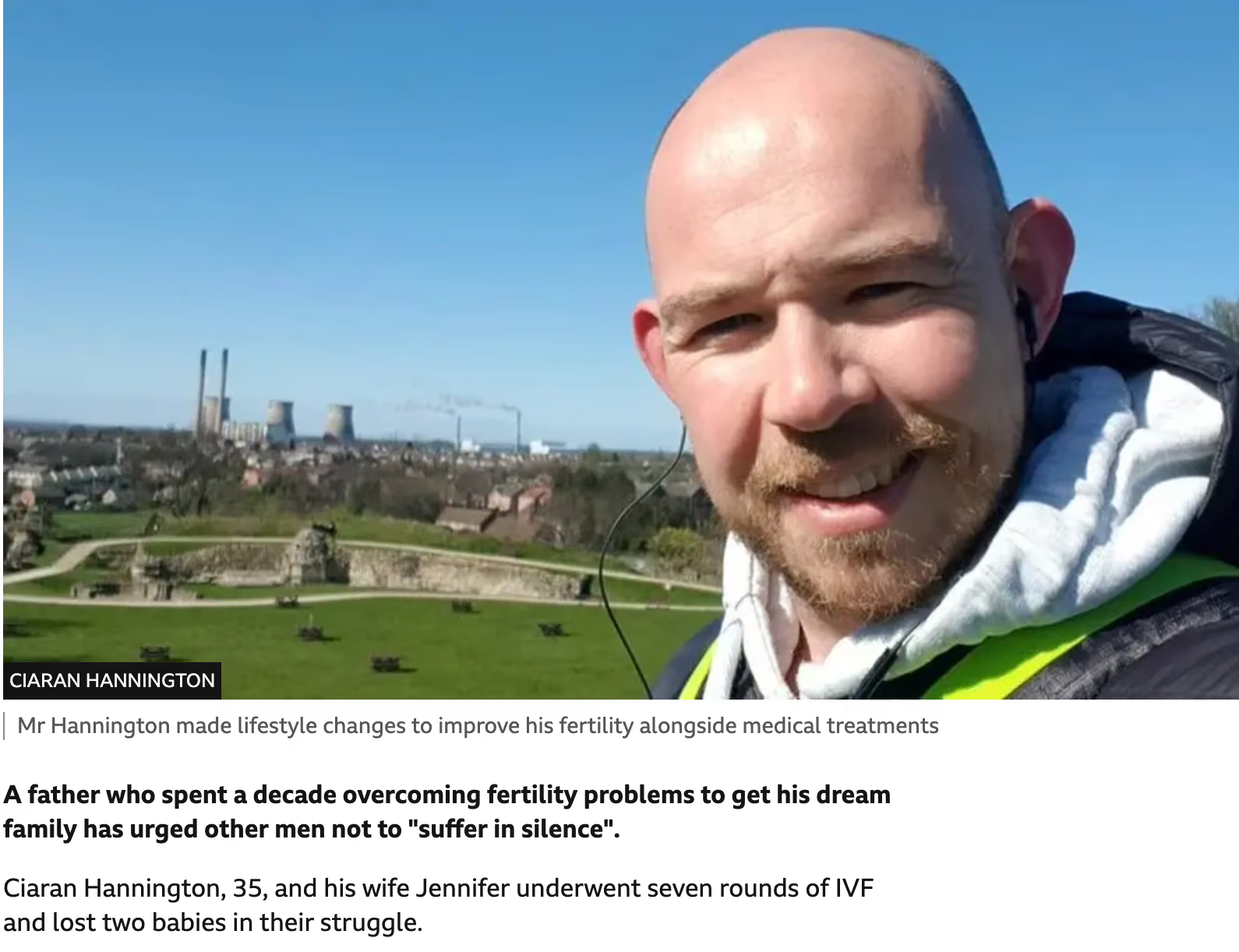
A male-infertility diagnosis can bring grief for the future you expected, guilt about a partner’s treatment and fear about identity or relationships. Those responses are not a personal failure, and they do not have to follow neat “stages”. In this first-person account, Ciaran explains what his diagnosis felt like, why silence prolonged the pain and how acknowledgement and conversation helped him move forward.
What did my male-infertility diagnosis feel like?
In January 2012, my wife and I went to our local fertility clinic expecting a prescription and permission to start trying again. I was not prepared for what came next.
The consultant told me that my semen-analysis results showed an extremely low sperm count, poor motility and poor morphology. I remember a question about steroid use, the change in the room and the physical sensation of shock: a racing heart, clammy hands and the feeling that I had somehow stepped outside myself.
I heard the medical information, but I did not yet have the words for what it meant emotionally. I understood only that the route to parenthood I had assumed would be available to us had changed.
Editorial note: check the wording of this clinical recollection against any records the author wishes to use. A semen analysis does not by itself explain the cause of infertility, and an abnormal result normally requires clinical interpretation and, often, repeat testing.
Why can an infertility diagnosis cause grief?
For me, grief did not mean grieving a person I had known. I was grieving an anticipated future: conceiving without treatment, sharing uncomplicated excitement and becoming a father in the way I had imagined.
That distinction mattered. Until I recognised the loss beneath my anger and numbness, I kept treating my reaction as something irrational that I should be able to suppress.
Grief after an infertility diagnosis can include:
- shock or disbelief;
- sadness, anger or envy;
- fear that parenthood may not happen as expected;
- changes in confidence, body image or sense of masculinity;
- difficulty being around pregnancy announcements or family events;
- a need to withdraw, work harder or appear unaffected.
Not every man experiences all of these feelings. There is no correct timetable, and distress can return around test results, treatment, loss, anniversaries or other people’s pregnancies.
How did grief become guilt for me?
My grief gradually became guilt. I blamed myself for failed rounds, setbacks and every tear my wife shed. Because much of the physical treatment happened to her, I told myself that I had caused her pain.
I also worried about what the diagnosis said about me. Would she still see me as the man she married? Had I failed as a husband before I had even had the chance to become a father?
Those thoughts felt convincing, but they were not fair or useful. Infertility is a health condition, not a moral failure. A diagnosis belongs to neither partner as blame, even when tests identify a male factor. Treatment decisions and their effects are something a couple can face together, with professional support when needed.
Does grief follow five predictable stages?
The familiar model of denial, anger, bargaining, depression and acceptance can give people words for different reactions. It should not be used as a timetable or a test of whether somebody is grieving “properly”. Grief is often non-linear: feelings overlap, disappear and return.
For me, acceptance did not mean liking what had happened or never feeling pain again. It meant recognising reality without making the diagnosis the whole definition of who I was.
What helped me begin to cope?
The first meaningful step was acknowledgement. I began to say that I was grieving rather than pretending I was simply “fine”. Talking to my wife, trusted friends and eventually other men reduced the secrecy around it.
What helps will differ, but useful options can include:
- telling one trusted person what is happening;
- asking the clinic what counselling is available;
- agreeing with a partner how and when to discuss treatment;
- limiting situations or conversations that feel overwhelming;
- writing questions before appointments;
- joining a moderated peer-support group;
- speaking to a GP or mental-health professional when distress persists or affects daily life.
Talking is not the only valid way to process emotion. Some men begin with walking, writing, exercise, creative work or a practical conversation. The aim is not forced disclosure. It is finding a safe route out of isolation.
What can a partner or friend say?
You do not need to solve the diagnosis. A useful opening can be: “I’m here. Do you want me to listen, help with something practical, or give you some space?”
Avoid telling someone to stay positive, relax or be grateful for what they already have. It is usually more helpful to acknowledge that the situation is hard and follow their lead.
When should you seek urgent help?
If fertility-related distress is affecting sleep, work, relationships or your ability to function, contact your GP, clinic counsellor or another qualified mental-health professional. If you feel unable to keep yourself safe or might act on thoughts of suicide, seek urgent help now through emergency services or an urgent mental-health service. In the UK and Ireland, Samaritans can be reached free on 116 123.
What I would tell the man receiving that diagnosis today
You may feel grief, guilt, anger, nothing at all or several emotions at once. None makes you less of a man or less capable of being a loving partner or parent.
My diagnosis changed me, but it did not finish my story. Peace came gradually, through honesty, support and the realisation that biology and worth are not the same thing. You do not need to reach that point today. You only need somewhere safe to begin.
Questions to ask your fertility clinic
- What do my semen-analysis results mean, and should the test be repeated?
- Do I need referral to an andrologist, urologist or reproductive-medicine specialist?
- What support is available for me as well as my partner?
- Does the clinic have a fertility counsellor who is accredited by BICA?
- Where can I find moderated male peer support?
Related Male Fertility Hub resources
- Link to Semen Analysis Results Explained.
- Link to Counselling and Coaching for Male Fertility Challenges.
- Link to Mental Health and Male Infertility: Real Stories from Real Men.
- Link to the Hub’s current support or community page.
Sources and support
- Human Fertilisation and Embryology Authority: Getting emotional support
https://www.hfea.gov.uk/treatments/explore-all-treatments/getting-emotional-support/ - British Infertility Counselling Association
https://www.bica.net/ - NHS: Low sperm count
https://www.nhs.uk/conditions/low-sperm-count/ - Samaritans
https://www.samaritans.org/how-we-can-help/contact-samaritan/
This article combines one person’s lived experience with general information. It is not a diagnosis or a substitute for individual medical or psychological care.